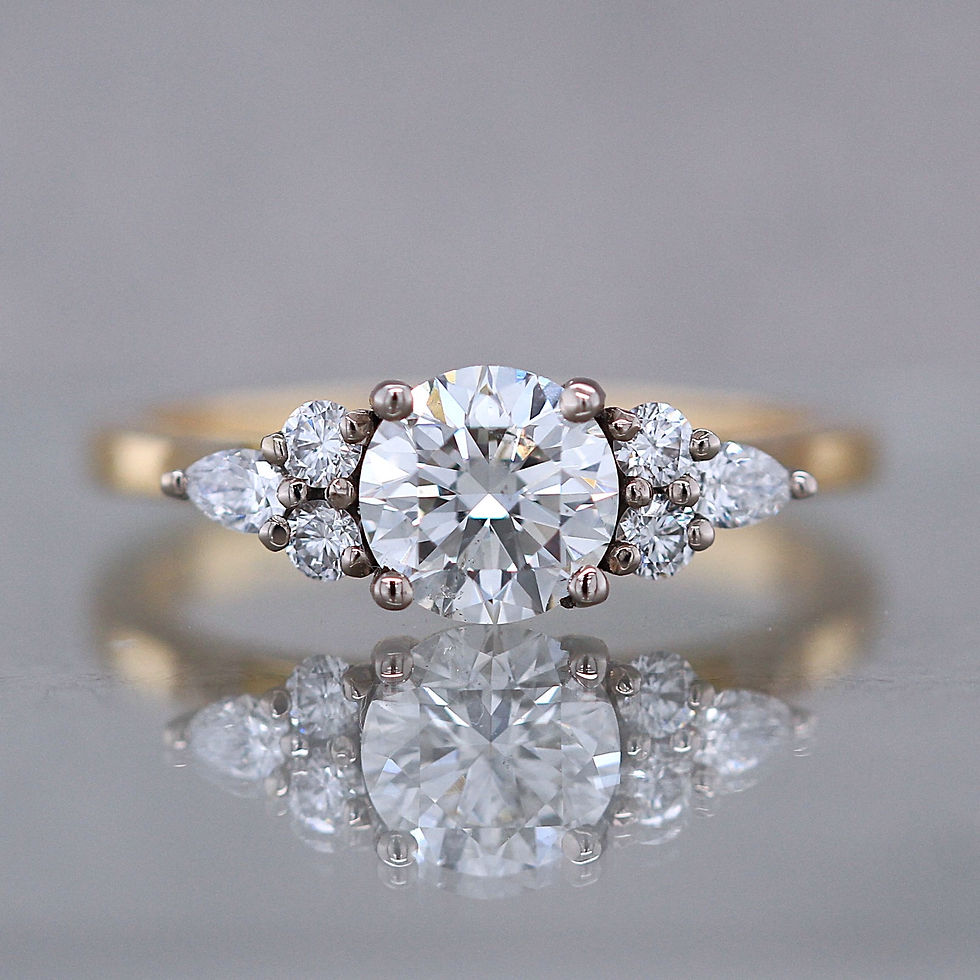
Your Engagement Ring Aftercare Guide: Keeping It Sparkling for Life

Updated: 42 minutes ago

An engagement ring lives a different life to almost any other piece of jewellery you'll own. It goes everywhere with you, the school run, the gym, the washing up and it's precisely that everyday closeness that eventually takes its toll. None of this is complicated to manage. It just helps to know what you're actually managing.
Daily Wear: What to Watch For
Most damage isn't dramatic. It's cumulative, a slow build-up of knocks, chemicals and grime that eventually dulls a stone or loosens a setting. Moisturiser, hand cream and sunscreen leave a filmy residue on the surface of a diamond that cuts down its sparkle within days. Chlorine, in particular, can react with certain metal alloys over time, so it's worth sliding the ring off before a swim or a hot tub. Gardening, heavy cleaning, weights at the gym and DIY are the other usual suspects, not because a ring can't take a knock, but because a claw catching on a glove or a worktop is one of the most common ways a stone ends up loose.
The simple habit that solves most of this: keep the ring on for daily life, but get into the routine of taking it off for anything involving chemicals, heavy impact, or activities where you'd be gripping something firmly and repeatedly.
A Simple At-Home Routine
You don't need anything specialist for regular upkeep between visits to us. A soft habit, kept up weekly, goes a long way.
Soak briefly in warm water with a few drops of mild washing-up liquid, nothing abrasive, nothing with bleach.
Brush gently underneath the stone and around the setting with a very soft, clean toothbrush, where dust and residue tend to collect unseen.
Rinse and dry thoroughly with a soft, lint-free cloth before putting the ring back on or away.
Store it separately from other jewellery, ideally in a lined box or pouch, so metal edges and settings don't scratch against one another.
"Most lost stones aren't lost in dramatic moments, they're lost slowly, one worn prong at a time."
The Six-Month Check-In
Alongside what you can do at home, we'd always recommend having the setting properly checked by a goldsmith roughly every six months. Claws wear down gradually with everyday contact, and a claw that looks fine to the eye can already be thin enough to risk the stone. It's a five-minute check for us, and it's the single biggest thing you can do to prevent losing a stone altogether. If you have a white gold ring, this is also the natural point to think about a rhodium plating refresh, since that bright white finish fades gradually with wear and polishes back up beautifully.
When to Bring It In
Beyond the routine six-month check, there are a few signs worth acting on sooner rather than later: a stone that feels slightly loose when you nudge it with a fingernail, a claw that's visibly thinner or shorter than the others, a clasp on a matching chain that doesn't catch as firmly as it used to, or simply that the ring hasn't sparkled properly in a while no matter how much you clean it at home. None of these need to wait for an appointment, pop in and one of our goldsmiths will take a look on the spot.
If your ring came with our Diamond Guarantee, you're also entitled to a complimentary professional clean every year as standard, on top of anything you're doing at home, it's one of the easiest ways to keep a ring looking exactly as good as the day you were given it.