

Lab-Grown vs Mined Diamonds: What's Actually the Difference?

Updated: 1 hour ago
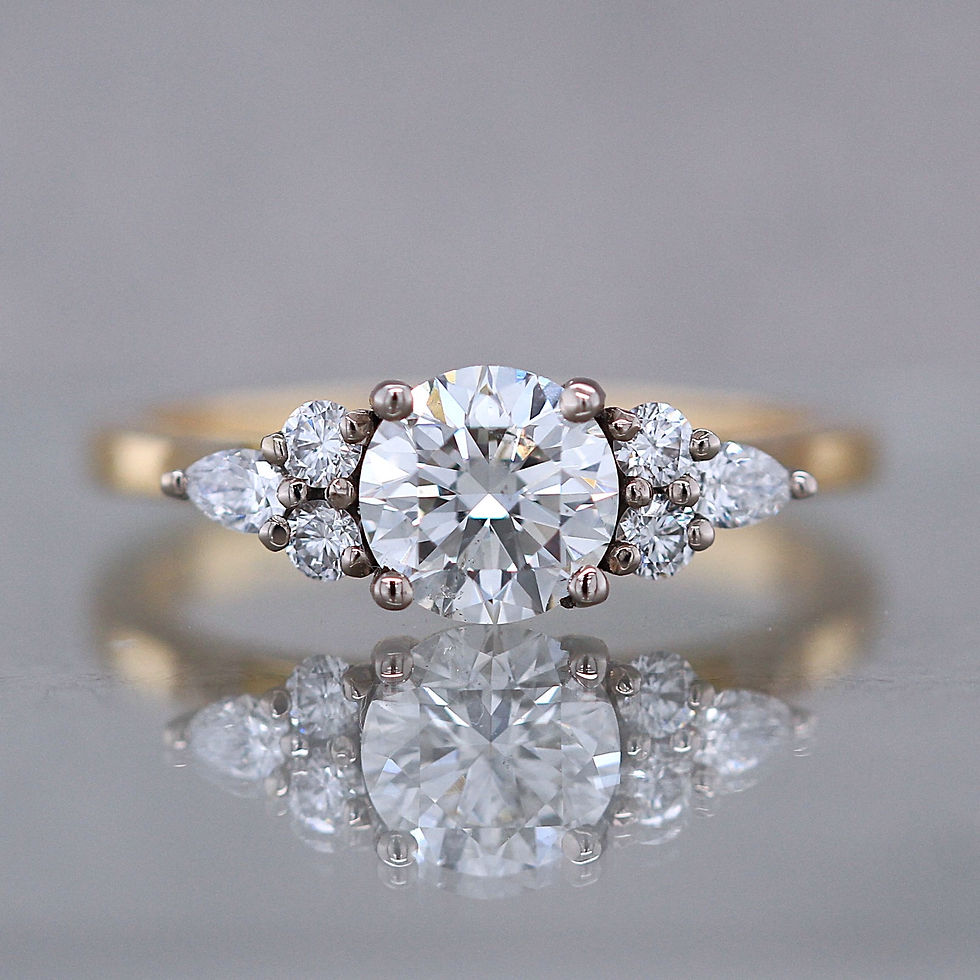
This is the question we get asked more than almost any other across the counter, usually with a slightly apologetic look, as if there's an embarrassing answer we're not saying out loud. There isn't. Here's the honest version, without a sales pitch attached to either side.
Same Diamond, Different Origin
Start with the part that surprises most people: a lab-grown diamond isn't a fake, a simulant, or a "diamond alternative" in the way cubic zirconia or moissanite are. Chemically, physically and optically, it's the same material as a diamond pulled out of the ground, pure crystallised carbon, arranged in exactly the same structure. Under a loupe, a jeweller's microscope, or even most standard gemmological testing, the two are indistinguishable without specialist equipment designed specifically to spot growth patterns.
The only real difference is where, and how, the diamond was formed. A mined diamond crystallised naturally, under enormous heat and pressure, somewhere between one and three billion years ago, and was eventually brought close enough to the surface for someone to find it. A lab-grown diamond is grown in a controlled chamber that recreates those same conditions, either through high pressure, high temperature (HPHT), or chemical vapour deposition (CVD), compressing a process that would otherwise take a geological age into a matter of weeks.
"Chemically, physically and optically, a lab-grown diamond is a diamond, the only real difference is where, and how, it was formed."
So What's Actually Different?
If the stone itself is identical, the differences that matter are all about what surrounds it.
Rarity and story. A mined diamond carries a kind of geological history with it, it's been sitting in the earth since before complex life existed, which is part of why mined stones have always carried a certain romance and mystique.
Price per carat. Lab-grown diamonds typically cost significantly less than a mined diamond of equivalent size and quality, which means your budget stretches further, either towards a bigger stone, a higher grade, or more left over for the setting.
Environmental footprint. Growing a diamond in a lab generally uses fewer resources and causes less land disruption than mining one, though neither process is entirely without impact.
Long-term value. Mined diamonds have, historically, held their resale value more reliably than lab-grown stones, whose prices have been falling as the technology becomes more widespread. If you're thinking of a diamond purely as an investment, that's worth knowing, though most people buying an engagement ring aren't buying it as one.
Does It Show in the Ring?
No. Both are graded on exactly the same 4Cs, cut, colour, clarity and carat, using the same scales, and both are certified by the same gemmological laboratories. A well-cut lab-grown diamond will catch the light just as beautifully as a well-cut mined one, because it's the cut, far more than the origin, that determines how a diamond actually performs on the hand.
Where the two do sometimes diverge is at the very top and bottom of the market, extremely large or exceptionally rare fancy-coloured diamonds are still overwhelmingly mined, simply because growing a lab diamond that size or colour is harder and more expensive than mining one happens to be.
So Which Should You Choose?
Genuinely, there's no wrong answer. If the story of a stone that's been forming since before the dinosaurs matters to you, or you want the strongest possible resale value, a mined diamond is the right call. If you'd rather put your budget towards size, clarity, or the design of the setting, or you simply like the idea of a lower environmental footprint, lab-grown is an easy recommendation.
What we'd always encourage is coming in and looking at both in person before deciding. Photos and spec sheets only tell you so much; the way a diamond actually looks on your hand, under real light, is what you're going to live with every day.

